
Pilates & Rehabilitation
Why Pilates Is Not Just for Flexibility and What It Actually Does for Pain
Most people think Pilates is about flexibility. It is not. Here is what Pilates guided by a Clinical Myotherapist actually does and why it is one of the most effective tools for chronic pain.
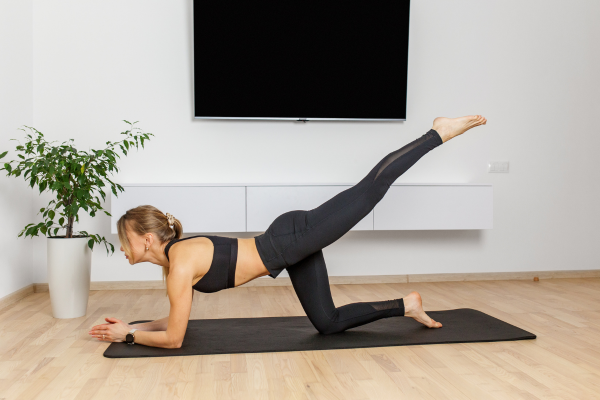
There is a common misconception that Pilates is for flexible people who want to get more flexible. The reality is almost the opposite.
Pilates, when guided by someone who understands pain and injury, is one of the most effective tools for building the kind of strength and stability that keeps chronic pain from returning.
Pilates is not about flexibility. It is about control, stability and teaching your body to move the way it is supposed to.
What Pilates actually trains
Pilates is often associated with stretching and light exercises but that is only a small part of it. At its core Pilates is about control, stability and how your body moves as a whole. It focuses on deep core activation, muscle coordination and timing, joint stability, controlled movement through range and body awareness.
Rather than just making muscles stronger, Pilates retrains how your body uses those muscles. This is particularly important for people with pain, because in many cases the issue is not just weakness. It is that the right muscles are not doing their job at the right time.
The difference between Pilates guided by a myotherapist and a generic class
Not all Pilates is the same. Generic Pilates classes are designed for general fitness. They can be helpful but they are not tailored to individual injuries or pain patterns.
When Pilates is guided by a Clinical Myotherapist with rehabilitation experience, it is a different thing entirely. Every session is informed by a thorough understanding of how your body is moving, where it is compensating and what it specifically needs. Exercises are selected and progressed based on your movement patterns, limitations and goals rather than a standard class format.
At Back to Life, we integrate elements of classical Pilates, contemporary Pilates and reformer-based movements adapted onto the mat, drawing on the strengths of each approach while tailoring every session to your body. Exercises are modified to suit your current level, movements are chosen based on your pain and presentation, and technique is closely monitored to ensure you are using the correct muscles. This is what makes Pilates effective for pain, not just fitness.
The issue with chronic pain is often not just weakness. It is that the right muscles are not switching on at the right time. Pilates guided by a myotherapist addresses exactly that.
How deep core stability relates to chronic pain
One of the key areas Pilates targets is deep core stability. This includes muscles such as the transverse abdominis, pelvic floor and deep spinal stabilisers. These muscles act as a support system for your spine and pelvis.
When these muscles are not functioning well, the body relies on larger more superficial muscles to create stability. This leads to overuse, tension and inefficient movement patterns that over time contribute significantly to pain.
Improving deep core stability helps reduce unnecessary strain on joints, improves movement efficiency, supports the spine during daily activities and decreases the likelihood of flare-ups. This is why Pilates is so consistently effective for ongoing back, hip and neck pain.
Who benefits most from Pilates
Pilates is particularly effective for people who experience recurring or chronic pain, feel stiff, weak or unstable, have had previous injuries, are unsure how to exercise safely, or have been relying on passive treatments without long-term improvement.
It is also a great option for people returning to exercise after time off or who want to build a stronger foundation before progressing to more traditional strength training.
What to expect in a session at Back to Life
A Pilates session at Back to Life Pain Clinic is not a one-size-fits-all class. Every session begins with an assessment of your posture and movement, focuses on technique and control rather than speed or intensity, and includes targeted exercises based on your specific needs with ongoing adjustments and progressions as your body improves.
Sessions are kept small, with a maximum of three people, so that you receive close supervision throughout. The aim is not just to complete exercises but to ensure you are moving correctly and building the right kind of strength for your body.
Ready to try Pilates?
Sessions tailored to your body and your goals.
At Back to Life Pain Clinic in Hampton Park, Pilates is guided by Kelly Lanctot, a qualified Clinical Myotherapist with rehabilitation experience who understands pain, injury and how your body compensates. Small group and 1:1 sessions available.
Back to Life Pain Clinic serves clients from Berwick, Cranbourne, Narre Warren, Lynbrook, Endeavour Hills, Hallam and Dandenong South. Book online at backtolifepainclinic.com.au
